
Do you often find that the best conversations — the ones where you really feel able to open up with someone you trust — happen when you are out for a walk?
There is something about being side by side, breathing in fresh air and allowing your mind to slow down that can make difficult conversations feel a little easier.
Walk & Talk Therapy combines the benefits of traditional counselling with the restorative effects of gentle movement and spending time in nature. For many people, walking outdoors can feel less formal than sitting in a therapy room, creating a more natural environment in which to talk openly, reflect and process difficult emotions.
What Is Walk & Talk Therapy?
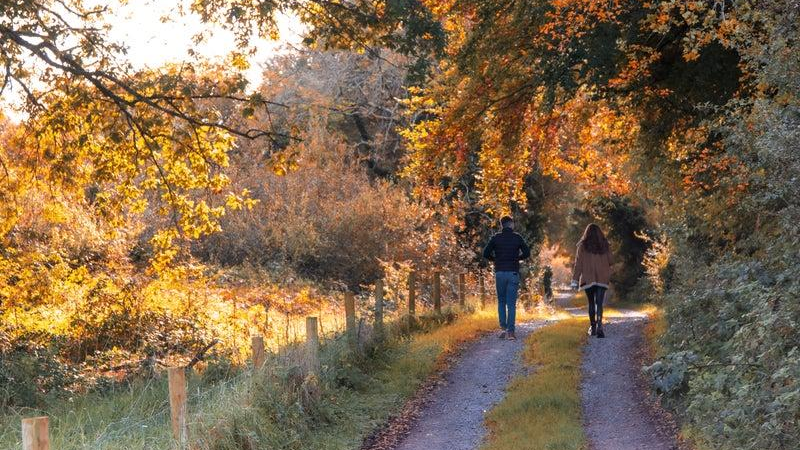
Walk & Talk Therapy is a form of counselling that takes place outdoors rather than in a traditional therapy room. Sessions involve walking together at a comfortable pace, with opportunities to pause, sit on a bench or simply take a moment to notice your surroundings.
The focus remains on therapy and the therapeutic relationship. The outdoor setting simply provides a different environment in which that work can take place.
For some people, being outdoors can make therapy feel more relaxed and accessible. There is also less pressure to maintain eye contact, and conversation can sometimes flow more naturally when you are walking alongside rather than sitting directly opposite someone.
What Does Research Say About Nature and Mental Wellbeing?
There is growing research suggesting that spending time in nature and engaging in gentle movement can have a positive effect on emotional wellbeing.
Nature, Rumination and Emotional Wellbeing
Psychologist Dr Gregory Bratman of Stanford University has researched the relationship between spending time in nature and mental wellbeing.
His research found that walking in natural environments can reduce rumination — repetitive patterns of negative thinking that can often accompany anxiety, depression and emotional distress.
Being in nature may therefore provide more than simply a change of scenery. It can create an opportunity to step away from repetitive thoughts and reconnect with the present moment.
The Benefits of “Green Exercise”
Professor Jules Pretty from the University of Essex has spent many years researching what is known as “Green Exercise” — physical activity undertaken in natural environments.
His research suggests that even gentle activity in natural surroundings can have positive effects on mood, stress levels, psychological wellbeing and self-esteem.
This is particularly encouraging because you don’t need to run, hike or undertake strenuous exercise to experience the potential benefits. A gentle walk can be enough.
How Much Time in Nature Do We Need?
One particularly interesting finding comes from a large study led by Mathew White at the European Centre for Environment and Human Health.
The research found that people who spent at least 120 minutes each week in nature were significantly more likely to report good health and higher levels of wellbeing.
Importantly, those 120 minutes do not have to happen in one session. Time spent in nature can be spread throughout the week.
For some people, incorporating therapy into an outdoor setting can therefore provide an opportunity to combine emotional support with time spent connecting with nature.
Can Walking Help Us Think Differently?
There is also evidence that walking may support creativity and flexible thinking.
A study by Marily Oppezzo and Daniel Schwartz at Stanford University found that walking increased creative thinking by an average of around 60% compared with sitting.
This may help explain why people sometimes find that ideas come more easily when they are walking.
Many people describe finding it easier to think through problems, gain perspective or consider possible solutions while moving rather than sitting still.
In therapy, this can be particularly useful when you feel stuck, overwhelmed or unable to see a situation differently.
Why Can Walking Make Talking Feel Easier?
Alongside the research, there is something beautifully human about walking together.
When we walk side by side, there can be less pressure to maintain eye contact. Conversations can feel more spontaneous, and moments of silence can feel comfortable rather than awkward.
We can pause to notice birdsong, changing seasons, the landscape around us or simply take a few slow breaths.
There is also something reassuring about being reminded that nature is constantly changing. Seasons come and go, landscapes change and difficult periods eventually pass.
Sometimes, simply stepping outside can create enough space to see things from a slightly different perspective.
Who Might Benefit from Walk & Talk Therapy?
Walk & Talk Therapy may be particularly helpful if you are experiencing:
- Anxiety or chronic stress
- Low mood or depression
- Feeling stuck or overwhelmed
- Grief and loss
- Relationship difficulties
- Major life transitions
- Burnout
- A desire to support your wellbeing while enjoying gentle outdoor movement
It may also appeal to people who feel uncomfortable with the more formal atmosphere of a traditional counselling room.
However, Walk & Talk Therapy is not about forcing yourself to walk or be outdoors when that doesn’t feel right. The most important thing is finding an environment where you feel comfortable, safe and able to engage with therapy.
Walk & Talk Therapy in Haddenham and the Surrounding Countryside
I offer Walk & Talk Therapy in peaceful locations around Haddenham and the surrounding countryside.
Routes are chosen to be quiet, accessible and appropriate for each individual. Sessions are always at your own pace.
We can walk together, pause when needed, sit on a bench or simply enjoy a few moments of comfortable silence.
There is no expectation to maintain a particular pace or distance. The therapy comes first, and the walk provides the setting.
What If Walking Outdoors Isn’t Right for Me?
Walk & Talk Therapy isn’t the right approach for everyone.
Some people prefer the comfort, privacy and familiarity of a counselling room. Others may feel more comfortable talking online from their own home.
That’s completely okay.
Together, we can consider which environment feels safest and most supportive for you. The goal is not to find the “right” type of therapy setting, but to find an approach that allows you to feel comfortable enough to do meaningful therapeutic work.
A Safe and Compassionate Space
As psychologist Carl Rogers reminded us, healing can take place within a therapeutic relationship where we feel accepted, understood and free to be ourselves.
Whether that relationship develops in a counselling room, online or while walking beneath open skies, my hope is to provide that same safe and compassionate space.
Therapy doesn’t have to look exactly the way you imagined it.
Sometimes, changing the environment can help us see things differently, breathe a little more deeply and begin to move forward.
Sometimes the first step towards feeling better really is… simply taking the first step.
References
Bratman, G. N. et al. (2015). Nature experience reduces rumination and subgenual prefrontal cortex activation. Proceedings of the National Academy of Sciences.
Oppezzo, M. & Schwartz, D. L. (2014). Give your ideas some legs: The positive effect of walking on creative thinking. Journal of Experimental Psychology: Learning, Memory, and Cognition.
Pretty, J. et al. (2007). Green exercise in the UK countryside: Effects on health and psychological wellbeing.
White, M. P. et al. (2019). Spending at least 120 minutes a week in nature is associated with good health and wellbeing. Scientific Reports.