

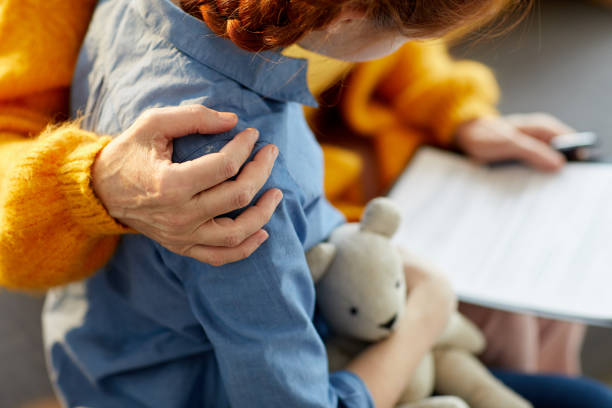
Every child feels worried sometimes. A wobble before the first day of school, nerves before a birthday party, a fear of the dark — these are a normal, healthy part of growing up. But sometimes worry stops being a passing phase and starts to shape how a child eats, sleeps, plays and connects with the people around them. When that happens, it can be hard for parents to know whether they’re seeing ordinary childhood nerves or something that needs a little more support.
If you’ve found yourself watching your child and quietly wondering “is this just a stage, or is my child actually struggling?” — you are not alone, and you are already doing something loving simply by paying attention.
In England, roughly one in five children aged 8 to 16 now has a probable mental health condition, and anxiety is consistently one of the most common reasons families reach out for help. The pressures are real — school, friendships, social media, and the aftermath of some very unsettled years. The encouraging news is that childhood anxiety is highly responsive to the right support, especially when it’s noticed early.
This guide will help you recognise the signs of anxiety in children and teenagers, understand when it’s worth seeking help, and know what gentle, evidence-based support looks like — including how Counselling Ely works alongside families across the UK.
What childhood anxiety actually is
Anxiety is the body’s built-in alarm system. It’s designed to protect us — a burst of adrenaline that helps us react to genuine danger. In children, this alarm can become oversensitive, firing in everyday situations that aren’t actually threatening: a maths test, a sleepover, a change to the usual routine.
The important distinction isn’t whether your child feels anxious — all children do — but rather:
- How intense the worry is
- How long it lasts
- How much it interferes with everyday life
Ordinary worry tends to come and go and settles with reassurance. Anxiety that needs support tends to stick around, feels out of proportion to the situation, and starts to shrink your child’s world — the things they’ll try, the places they’ll go, the friends they’ll see.
Why anxiety in children is easy to miss
Anxiety rarely announces itself. Many children don’t have the words to say “I feel anxious,” so it comes out sideways — as tummy aches, tears, clinginess, anger, or simply going quiet. A child who is struggling might look “naughty,” “shy,” “fussy” or “difficult” long before anyone recognises anxiety as the root cause.
Teenagers can be even harder to read. A withdrawn teen who spends hours alone in their room may be dismissed as “just being a teenager,” when underneath they’re wrestling with worry they don’t know how to voice. This is exactly why knowing the specific signs matters so much.
Physical signs of anxiety in children
Anxiety lives in the body long before it’s put into words. Watch for:
- Frequent tummy aches or headaches with no clear medical cause, often worse on school mornings
- Changes in sleep — trouble falling asleep, nightmares, waking in the night, or wanting to sleep in your bed again
- Changes in appetite — eating noticeably more or less than usual, or feeling sick at mealtimes
- Racing heart, breathlessness or shakiness, especially before a specific event
- Restlessness or fidgeting, nail-biting, hair-twirling or picking at skin
- Frequent trips to the toilet or bedwetting after previously being dry
- Tiredness and low energy, because worry is exhausting
A single symptom on its own usually isn’t cause for concern. It’s the pattern — several signs together, or one that keeps returning — that’s worth paying attention to.
Emotional and behavioural signs
Alongside the physical signs, anxiety often shows up in how a child feels and behaves:
- Excessive worrying — asking “what if…?” repeatedly, or seeking constant reassurance
- Clinginess and separation distress — difficulty being apart from you, even briefly
- Avoidance — refusing invitations, activities or situations they used to enjoy
- Irritability, meltdowns or anger that seem out of character (anxiety very often masquerades as frustration)
- Perfectionism and fear of failure — getting very upset over small mistakes
- Difficulty concentrating — a mind that’s busy worrying has little room left for schoolwork
- Becoming withdrawn or unusually quiet, pulling away from family and friends
Signs can look different at different ages
Anxiety wears different faces as children grow, so it helps to know what to look for at each stage.
Younger children (primary age)
Little ones often can’t name their feelings, so anxiety tends to show physically and behaviourally: tummy aches, clinginess, tearfulness, trouble sleeping, big emotional outbursts, or regressing to younger behaviours like baby talk or bedwetting. School refusal — real distress at the school gate — is a common and important signal at this age.
Teenagers and young adults
Older children have more words but don’t always use them. In teens, anxiety often shows up as irritability, withdrawal, spending excessive time alone, avoiding social situations, dropping activities they once loved, sleep problems, changes in eating, or a dip in schoolwork. Some become perfectionistic and self-critical; others seem angry or “switched off.” Physical complaints and panic-like episodes are common too.
Understanding this age difference matters — and it also shapes the kind of support that works best, which we’ll come to next.
Signs at school
School is often where anxiety first becomes visible. You might notice:
- Reluctance or outright refusal to go to school
- Reports from teachers about your child being tearful, distracted or withdrawn
- A drop in grades or unfinished work
- Avoiding putting their hand up, presentations, or PE
- Frequent visits to the school nurse with aches and pains
- Difficulty with friendships, or being on the edge of the group
If school has flagged concerns, it’s always worth a conversation with them — and it’s a signal that a little extra support at home could make a real difference.
When is it time to seek help?
Some worry is completely normal, so how do you know when to reach out? Consider seeking professional support if you notice that anxiety is:
- Persisting for several weeks or more, rather than passing
- Interfering with daily life — school, sleep, eating, friendships or family life
- Shrinking your child’s world — they’re avoiding more and more
- Causing real distress to your child (or to you)
- Accompanied by low mood, hopelessness, or talk of not wanting to be here
That last point deserves special care. If your child ever expresses that they don’t want to be alive, or if you’re worried about their immediate safety, please don’t wait — contact your GP, call 111 and select the mental health option, or in an emergency call 999 or go to A&E. You can also reach a trained counsellor any time on the Samaritans free helpline on 116 123. For under-19s, Childline offers free confidential support on 0800 1111.
Reaching out early isn’t an overreaction — it’s one of the most protective things a parent can do. Anxiety responds well to support, and the sooner a child gets help, the easier it usually is to turn things around.
How you can gently help at home
While professional support can be invaluable, there’s a great deal parents can do day to day. These approaches are drawn from evidence-based therapies like Cognitive Behavioural Therapy (CBT) and Acceptance & Commitment Therapy (ACT):
- Name it to tame it. Help your child put feelings into words — “It sounds like your tummy feels funny because you’re worried about the test.” Naming an emotion genuinely helps calm the brain’s alarm system.
- Validate, don’t dismiss. Avoid “there’s nothing to worry about.” Instead try, “That does sound scary. I’m here, and we’ll work it out together.”
- Resist the urge to remove every fear. Constantly avoiding what scares a child can accidentally make anxiety stronger. Gentle, supported steps toward the worry are what build lasting confidence.
- Keep routines steady. Predictable rhythms around sleep, meals and mornings help an anxious child feel safe.
- Model calm. Children borrow our nervous systems. Slow breathing, a steady voice and your own calm presence speak louder than any words.
- Protect sleep and limit late-night screens, which can feed worry.
If, despite your best efforts, the anxiety isn’t easing — or you simply feel out of your depth — that’s exactly the right moment to bring in some professional support. And crucially, you don’t have to have all the answers yourself.
How Counselling Ely supports anxious children and their families
At Counselling Ely, therapy is led by Erica Jackson, an experienced psychotherapist with over 30 years of NHS experience across mental health and emotional well-being, and more than 20 years in dedicated psychotherapy practice. Erica is a BACP member, a Registered Mental Health Nurse (RMN, NMC registered), fully DBS checked, and a mum herself — so she understands first-hand just how heavy it can feel when your child is struggling.
Importantly, Erica takes an approach grounded in what the research shows works best for children of different ages:
For parents of younger (primary-aged) children, Erica works with you, the parent — not directly with the child. This is deliberate and evidence-led: gently supporting parents to understand and shift worry, low confidence and behavioural difficulties at home consistently gives the best long-term outcomes. You’ll come away with practical, compassionate strategies to help your child feel safer and more settled.
For teenagers and young adults, Erica works directly and confidentially with your young person, offering a warm, judgement-free space to talk through anxiety, low mood, school and exam stress, friendships, identity and everything in between. Many parents describe how their once-reluctant teen went from refusing to discuss their worries to actively looking forward to sessions.
Erica draws on gentle, evidence-based approaches — including CBT and ACT, woven together with Compassion Focused Therapy and a family/systems lens — always tailored to your family’s unique story.
Sessions are available face-to-face in Haddenham (near Ely, Cambridgeshire) or online across the whole of the UK, so support can fit around school runs, work and family life wherever you are. Every journey begins with a free, no-obligation 20-minute phone call, so you can share what’s on your mind and see whether it feels like the right fit — with absolutely no pressure to book.
Ready to talk? Call Erica on 07712 904220, email eckyj@hotmail.co.uk, or book your free 20-minute call.
A final word
Noticing that your child might be struggling is not a sign that you’ve done something wrong — it’s a sign that you’re a caring, attentive parent. Childhood anxiety is common, it’s understandable, and above all it’s treatable. With the right understanding at home and gentle, evidence-based support where it’s needed, children and teenagers can and do learn to feel calmer, braver and more themselves again.
If any of the signs in this guide feel familiar, you’re warmly invited to take that first small step and book a free 20-minute call with Erica. Sometimes the hardest part is simply reaching out — and you don’t have to do it alone.
Frequently asked questions
What are the first signs of anxiety in a child?
Early signs of anxiety in children often show up physically and behaviourally before a child can name their feelings — frequent tummy aches or headaches (especially on school mornings), trouble sleeping, clinginess, irritability, avoiding activities they used to enjoy, and constant reassurance-seeking. It’s the pattern of several signs together, or one that keeps returning, that’s most worth noting.
Is my child’s worry normal or a sign of anxiety?
Some worry is a normal, healthy part of growing up. The difference is intensity, duration and impact. Everyday worry comes and goes and settles with reassurance. Anxiety that needs support tends to be persistent, out of proportion to the situation, and starts to interfere with sleep, school, eating or friendships.
At what age can a child develop anxiety?
Anxiety can affect children of any age, including very young children. It simply looks different at different stages — younger children tend to show physical symptoms and behavioural changes, while teenagers more often become withdrawn, irritable or avoidant.
When should I seek professional help for my child’s anxiety?
Consider reaching out if the anxiety has lasted several weeks or more, is interfering with daily life, is causing real distress, or is making your child’s world smaller through avoidance. If your child ever talks about not wanting to be alive, or you’re worried about their safety, contact your GP, call 111, or in an emergency call 999.
Does Counselling Ely work directly with young children?
For younger, primary-aged children, Erica works with the parents rather than directly with the child, because research shows this gives the best long-term outcomes. For teenagers and young adults, Erica works directly and confidentially with the young person. Both options are available in person near Ely or online across the UK.
Can I get help for my child’s anxiety online?
Yes. Counselling Ely offers online sessions across the whole of the UK, making it easy to access evidence-based support wherever you live and to fit sessions around school and work. Every family starts with a free 20-minute phone consultation.