

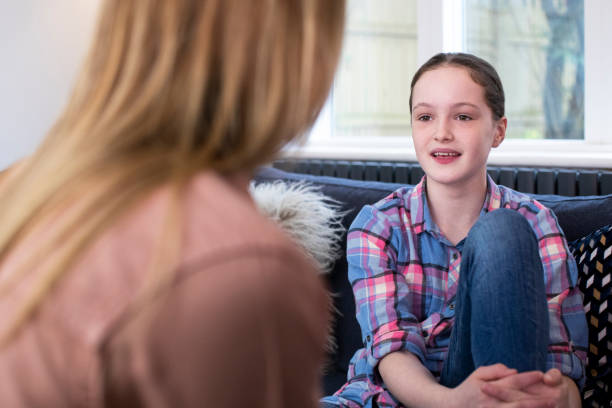
If you’re parenting a child with anxiety, you already know it can be one of the hardest, most heart-stretching jobs there is. You watch your child struggle with worries that feel enormous to them, you try everything you can think of to soothe them, and some days you go to bed wondering whether you’re helping or somehow making it worse. If that’s you, please take a breath: the fact that you’re reading this at all shows what a caring, committed parent you are.
Childhood anxiety is common — in England, around one in five children aged 8 to 16 now has a probable mental health condition, and anxiety is one of the most frequent reasons families seek help. You are far from alone, and — importantly — this is something that responds really well to the right support.
This guide looks at why parenting an anxious child feels so demanding, what actually helps day to day, and why supporting you — the parent — can be one of the most powerful ways to help your child. We’ll also look at how Counselling Ely walks alongside families across the UK. (If you’re still wondering whether what you’re seeing is anxiety, our guide to the signs your child may be struggling with anxiety is a helpful place to start.)
Why parenting an anxious child feels so hard
Anxiety doesn’t only affect the child — it ripples through the whole family. Parents often describe:
- Walking on eggshells — trying to predict and prevent whatever might set off the next wave of worry
- Emotional exhaustion — the constant reassurance, the bedtime battles, the school-gate tears
- Guilt and self-doubt — wondering if you caused it, or if you’re handling it wrongly
- Feeling torn — between comforting your child and pushing them to cope
- Isolation — it can feel like other families “have it easier,” which simply isn’t the whole picture
None of this means you’re failing. It means you love your child and you’re carrying something genuinely difficult. Understanding a few key principles can lighten that load enormously.
The protection trap: why removing every worry can backfire
When our child is distressed, every instinct says to make the distress stop — so we step in. We let them skip the party, we answer the “what if” questions on repeat, we sleep in their room, we phone ahead so they don’t have to speak to the shopkeeper. In the moment, it works: the anxiety drops and everyone feels calmer.
The difficulty is what happens next. This pattern — known as accommodation — quietly teaches an anxious brain two unhelpful lessons: that the feared thing really was dangerous, and that the child couldn’t have coped without rescue. Over time, the worry list grows and the child’s world shrinks. It’s one of the kindest, most natural traps a loving parent can fall into — and recognising it is the first step out.
The goal isn’t to throw your child in at the deep end. It’s to gently support them to face worries in small, manageable steps — and to build their belief that they can handle hard things. That’s where evidence-based approaches come in.
What actually helps: principles you can use at home
These strategies are drawn from the therapies with the strongest evidence for childhood anxiety — Cognitive Behavioural Therapy (CBT) and Acceptance & Commitment Therapy (ACT):
- Validate the feeling, not the fear. “I can see this feels really scary” calms your child far more than “there’s nothing to worry about.” Feeling understood settles the nervous system.
- Be a calm, steady base. Children co-regulate from us. Your slow breathing, unhurried voice and steady presence tell their body it’s safe — often more than words do.
- Encourage brave steps, not big leaps. Break a fear into a gentle “ladder” of small steps and celebrate each one. Facing worries a little at a time is how confidence is built.
- Praise effort and courage, not just outcomes. “You were so brave to try that” matters more than whether it went perfectly.
- Resist over-reassuring. Answer a worry once, kindly — then gently redirect. Endless reassurance feeds the anxiety loop.
- Keep routines predictable. Steady rhythms around sleep, meals and mornings help an anxious child feel safe and in control.
- Look after your own worry. Anxiety is contagious in both directions — when you feel steadier, your child usually does too.
Why supporting the parent works so well
Here’s something many parents find genuinely reassuring: you don’t have to hand your child over to be “fixed.” You are often the most powerful part of the solution.
Cognitive Behavioural Therapy has the strongest evidence base of any psychological treatment for childhood anxiety. And a substantial body of UK research — much of it led by Professor Cathy Creswell at the University of Oxford — shows that guided parent-delivered CBT, where a therapist coaches the parent to apply proven strategies in everyday life, produces excellent results, particularly for younger children.
In one landmark randomised controlled trial, roughly half of children had recovered from their main anxiety diagnosis after only around five hours of therapist contact with parents — rising to about three-quarters by the six-month follow-up. A separate evaluation found that around 70% of children needed no further anxiety intervention several months after parent-led treatment. In other words, equipping parents doesn’t just work — for younger children it can work exceptionally well.
This is exactly why a parent-focused approach isn’t a compromise or a second-best. For primary-aged children, it’s often the approach best supported by the research.
Looking after yourself matters too
Parenting an anxious child can leave you depleted, and it’s hard to be a calm anchor for someone else when your own reserves are empty. Making space for your own support — whether that’s rest, connection with other parents, or your own conversations with a therapist — isn’t a luxury or a sign of weakness. It’s part of helping your child. A steadier, better-supported you is one of the greatest gifts you can offer them.
When to seek professional support
Many worries ease with patience and the strategies above. It’s worth reaching out for professional support when:
- The anxiety has lasted several weeks or more and isn’t shifting
- It’s interfering with school, sleep, friendships, eating or family life
- Your child’s world is shrinking as they avoid more and more
- You feel stuck, overwhelmed, or unsure what to try next
- There’s low mood or hopelessness alongside the worry
If your child ever talks about not wanting to be alive, or you’re worried about their immediate safety, don’t wait — contact your GP, call 111 (mental health option), or in an emergency call 999. Free, confidential help is also available from Childline on 0800 1111 and the Samaritans on 116 123.
How Counselling Ely supports you and your child
At Counselling Ely, therapy is led by Erica Jackson, an experienced psychotherapist with over 30 years of NHS experience and more than 20 years in dedicated psychotherapy practice. Erica is a BACP member, a Registered Mental Health Nurse (RMN, NMC registered) and fully DBS checked — and, as a mum herself, she knows first-hand how heavy it can feel when your child is struggling.
Erica’s approach is deliberately shaped around what the evidence shows works best at each age:
Parent guidance for younger children. For primary-aged children, Erica works with you, the parent, rather than directly with your child — the very approach the research above supports. Together you’ll understand what’s driving the worry and build practical, compassionate strategies to help your child feel safer, braver and more settled at home.
Direct support for teenagers. For teenagers and young adults, Erica works directly and confidentially with your young person, offering a warm, judgement-free space for anxiety, low mood, school stress, friendships and identity.
Whether through gentle, evidence-based CBT and ACT, family sessions, or parent guidance, everything is tailored to your family’s unique story. Sessions run face-to-face in Haddenham (near Ely, Cambridgeshire) or online across the whole of the UK, fitting around school runs and work. And every journey begins with a free, no-obligation 20-minute phone call.
You don’t have to figure this out alone. Call Erica on 07712 904220, email eckyj@hotmail.co.uk, or book your free 20-minute call.
A final word
Parenting a child with anxiety asks a great deal of you — patience, steadiness, and love on the days when you feel you have little left to give. But you are not powerless, and you are not alone. With a few evidence-based shifts at home, and gentle professional support where it’s needed, children learn that they can face hard things — and parents rediscover their confidence too.
If you’d welcome a warm, experienced guide alongside you, you’re invited to take that first small step and book a free 20-minute call with Erica. Sometimes reaching out is the bravest thing a parent can do — and it’s the beginning of things feeling lighter.
Frequently asked questions
How can I help my child with anxiety at home?
Validate their feelings rather than dismissing them, stay a calm and steady presence, and gently encourage small “brave steps” toward the things that worry them instead of avoiding them altogether. Keep routines predictable, praise effort over outcome, and answer worries kindly once rather than reassuring endlessly. Looking after your own stress levels helps too, because children co-regulate from the adults around them.
Am I making my child’s anxiety worse?
Almost certainly not — and worrying about it shows how much you care. One very common, loving pattern to watch for is “accommodation”: stepping in to remove every source of worry. It soothes anxiety in the moment but can accidentally reinforce it over time. Gently supporting your child to face fears in small steps, rather than avoiding them, helps build lasting confidence.
Does helping the parent really help the child?
Yes. UK research, much of it led by Professor Cathy Creswell at the University of Oxford, shows that guided parent-delivered CBT — where a therapist coaches the parent — produces very good outcomes for childhood anxiety, especially in younger children. In one trial around half of children recovered from their main anxiety diagnosis after only about five hours of therapist contact, rising to roughly three-quarters within six months.
Should my young child see a therapist directly?
For younger, primary-aged children, the strongest evidence supports working with the parents rather than the child directly. At Counselling Ely, Erica therefore offers parent guidance for younger children, and works directly and confidentially with teenagers and young adults.
Can I get parenting support for anxiety online?
Yes. Counselling Ely offers sessions online across the whole of the UK, as well as face-to-face near Ely in Cambridgeshire, so support can fit around family life wherever you live. Every family starts with a free 20-minute phone consultation.
When should I seek professional help for my child’s anxiety?
Consider reaching out if the anxiety has lasted several weeks or more, is interfering with daily life, is causing real distress, or is making your child’s world smaller through avoidance — or simply if you feel stuck and unsure what to try next. If your child talks about not wanting to be alive, contact your GP, call 111, or in an emergency call 999.